Guide
Winter Condensation on Walls: Why It Happens and How to Stop It with Vapour Membranes
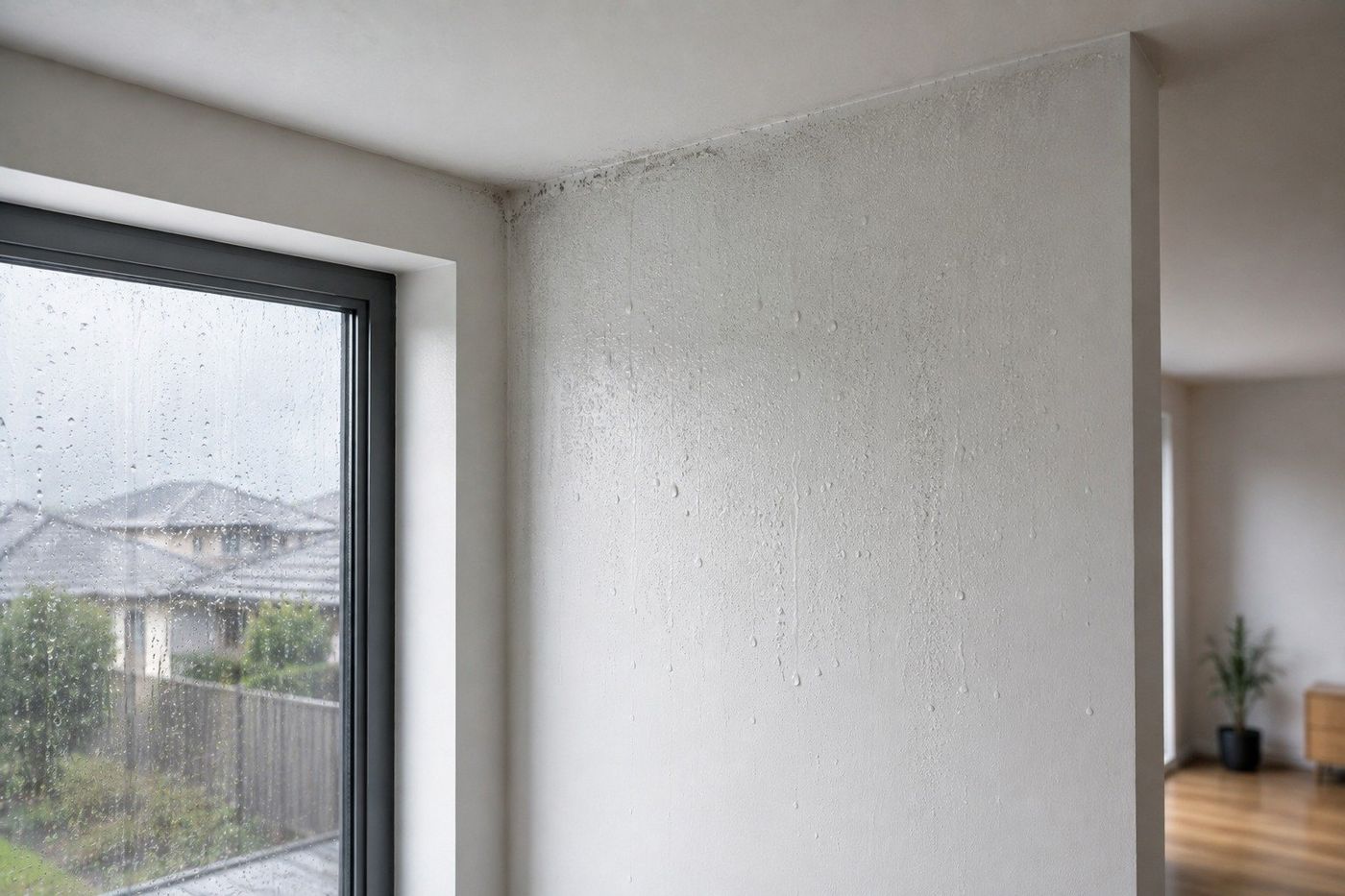
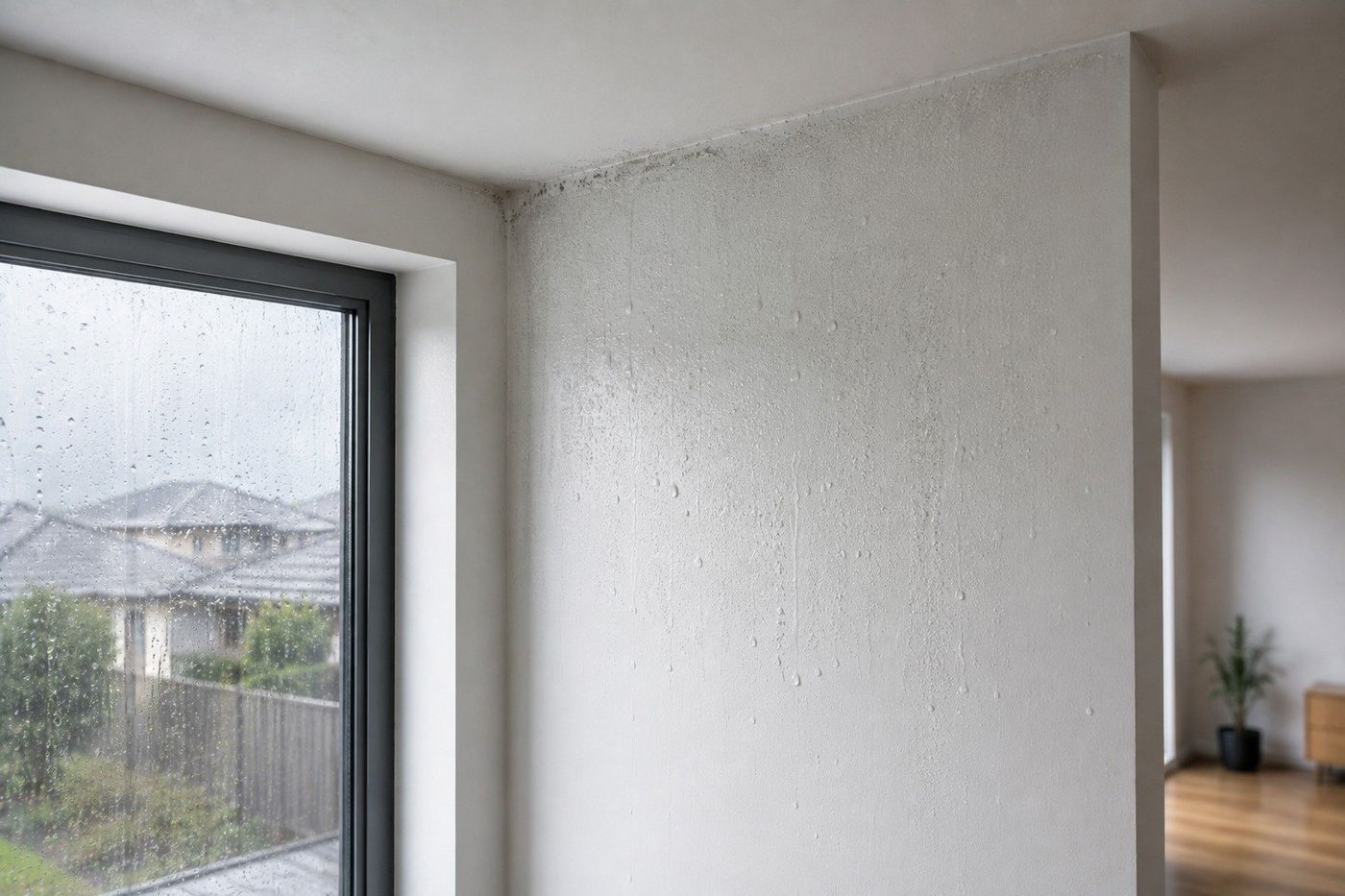
You walk into the spare room on a July morning and the wall is wet. Not leaking, wet. A film of water across the paint in the corner, maybe a grey bloom starting where it meets the ceiling. Nothing is broken, the roof is fine, and yet the wall is dripping.
Overview
You walk into the spare room on a July morning and the wall is wet. Not leaking, wet. A film of water across the paint in the corner, maybe a grey bloom starting where it meets the ceiling. Nothing is broken, the roof is fine, and yet the wall is dripping.
That's wall condensation , and it is one of the most misdiagnosed problems in WA housing. It gets blamed on leaks, on the weather, on the paint. It is actually a build-up problem, and it is solvable with the right membrane, the right insulation and somewhere for the moist air to go.
What Wall Condensation Actually Is
Air holds water as vapour, and warm air holds more of it than cold air. Every time that air is cooled past a certain point, its dew point, it can no longer carry the moisture, and the water comes out as liquid on the nearest cold surface.
In a house, the nearest cold surface in winter is almost always an external wall. Warm, humid indoor air drifts against it, cools, and drops its moisture onto the lining. That's all wall condensation is. No fault, no leak, just physics meeting a wall that is colder than it should be.
Which is why the fix for wall condensation is never a better paint. You either warm the surface up, dry the air out, or stop the vapour reaching a cold layer in the first place. Usually all three.
Why Perth Homes Get It Now More Than They Used To
Older WA houses leaked air constantly. Single-skin brick, gaps around windows, no wrap, unsealed downlights, moist air escaped almost as fast as it was made. Uncomfortable and expensive to heat, but rarely a condensation problem.
Modern homes are built far tighter, which is the right direction for energy efficiency. But sealing a house without planning where the moisture goes creates the conditions for wall condensation. Every shower, every load of washing, every gas heater and every pot on the stove puts litres of water into the air each day. In a sealed house with no mechanical ventilation, that moisture has to land somewhere.
None of those is a defect on its own. Together they are why wall condensation turns up in five-year-old houses and not in fifty-year-old ones. Wall condensation is largely a modern-construction problem.
- Tighter building fabric , less accidental ventilation than a 1970s brick veneer
- Higher indoor humidity , showers and drying laundry indoors through the wet months
- More heating , a bigger temperature difference across the wall means a colder inside face
- Insulation gaps , cold bridges at studs, noggings and around openings
- Windows shut from May to August , the moisture never gets a chance to leave
The Condensation You Can't See
Wall condensation comes in two forms, and only one of them is polite enough to announce itself. Surface condensation is the visible kind: water on the paint, mould in the corner, a musty smell.
Interstitial condensation happens inside the wall, where warm vapour has passed through the lining and hit a cold layer within the build-up. Nothing shows on the paint for months or years. Meanwhile the frame stays damp, insulation slumps and loses performance, and fixings corrode.
This is the one that matters, and it is the reason vapour management is a design decision rather than a maintenance task. By the time interstitial wall condensation is visible, it has usually been going on for several seasons.
How a Vapour-Permeable Membrane Works
A vapour-permeable wall wrap does two jobs that sound contradictory. From outside, it sheds liquid water, wind-driven rain that gets past the cladding runs down its face and out. From inside, it lets water vapour pass through and escape to the ventilated cavity.
That second property is what separates a modern breathable wrap from an old-style sealed sarking. A wall that can breathe outward dries itself between wet spells. A wall sealed on both sides traps whatever vapour gets in, and the frame never gets a chance to recover. That single property does more to prevent wall condensation than any other part of the wrap specification.
Our foils and membranes range covers the vapour-permeable wraps, sarking and liners specified across WA. The right choice depends on your cladding, your cavity and whether the wall is also doing a thermal job, worth a conversation rather than a guess.
Where NCC 2022 Sits on This
Condensation management is no longer optional or advisory in Australian construction. The National Construction Code sets requirements covering vapour permeance of pliable membranes, exhaust from wet rooms, and ventilation of roof spaces, and those provisions were tightened in the 2022 edition.
The practical upshot for a WA build is that the membrane you wrap the frame in has to be the right class for the assembly, and the wet rooms have to actually exhaust to outside air. ABCB's condensation mitigation guidance is the authoritative source and worth a read before you specify a wrap on price alone. Specifying to the Code is the floor for wall condensation control, not the ceiling.
Getting the Layers in the Right Order
Most wall condensation failures we hear about are not the wrong product, they are the right products in the wrong order, or with a gap in one layer. A wall that manages moisture properly does four things:
Drop any one of those and the other three work harder than they should. Skip two and you get wall condensation more or less regardless of what the wall is lined with.
- Keeps liquid water out. Cladding sheds the bulk of it; the wrap catches what gets past and drains it down and out at the base.
- Keeps the inside surface warm. Continuous insulation raises the lining temperature above dew point so the air never condenses against it in the first place.
- Lets vapour move outward. A permeable wrap plus a drained, ventilated cavity gives moisture a route out.
- Limits how much vapour is generated. Exhaust fans in wet rooms, ducted outside, running long enough to clear the room.
Insulation Does More Than Save Energy
It is easy to think of insulation purely as a heating bill question. For condensation it is the primary control. If the inside face of your wall sits at 18 degrees instead of 12, indoor air simply never reaches its dew point against it, and no amount of showering will make that wall sweat. Warm surfaces are the single most effective wall condensation control available to you.
The gaps matter as much as the coverage. A batt that has been squeezed around a pipe, a run of studs with no thermal break, an uninsulated lintel, each is a cold stripe where wall condensation will start. Products in our insulation range cover both batt and rigid board approaches; rigid boards are useful where you need continuity across the framing rather than just between it.
If your ceiling is the weak point rather than the walls, our pre-winter R-value checklist walks through what to look for up there.
What It Costs to Leave It Alone
Wall condensation is rarely treated as urgent, because for the first year or two it just looks like a housekeeping problem. The costs accumulate quietly:
Dealing with wall condensation early is almost always a materials-list decision. Dealing with it late is a construction job.
- Insulation stops working. Damp batts lose a large share of their R-value, so the wall gets colder and the condensation gets worse, a loop that feeds itself.
- Mould takes hold. Once it is into the paper facing of standard plasterboard , cleaning it off the surface is cosmetic at best.
- Timber and fixings suffer. Persistently damp framing and corroding fixings are a structural repair, not a decorating one.
- Redecorating repeats. Paint over a condensation stain and you will be painting the same wall again next winter.
- Heating gets more expensive. Wet insulation and cold surfaces mean you are paying to heat a wall that keeps giving the warmth back.
A Pre-Winter Wall Condensation Check
Ten minutes, no tools, worth doing before the cold sets in:
If several of those come back positive, the problem is the wall build-up rather than the household's habits, and it is worth getting the specification looked at properly.
- Check the coldest external corners on the south side for damp or dark patches
- Look behind wardrobes and against the back of furniture on external walls
- Confirm every bathroom and laundry fan discharges outside, not into the roof space
- Run a fan for 15 to 20 minutes after a shower, not 30 seconds
- Dry laundry outside or vent the dryer, an indoor load can release several litres
- Open the house up for 10 minutes on a dry day to purge humid air
- Check the roof space has ventilation at both eaves and ridge
- Look for vertical damp stripes on the lining, those follow the studs and mean a cold bridge
Fixing It in a House That's Already Built
You cannot re-wrap a finished house without pulling the cladding, and for most homes that is not proportionate. What does work, roughly in order of value for money:
That last one matters most. The moment a wall is opened for a renovation or a repair is the cheapest chance you will ever get to fix wall condensation properly, and it is the one most often missed.
- Improve extraction first, a properly ducted fan in each wet room, on a run-on timer
- Top up ceiling insulation, which is cheap, accessible and lifts internal surface temperatures
- Close cold bridges you can reach: uninsulated bulkheads, service voids, unlined garage walls
- Add a dehumidifier in the worst room over the wet months as a stopgap, not a solution
- When cladding or lining does come off for any reason, upgrade the wrap and insulation while the wall is open
FAQ
Is wall condensation the same as rising damp?
No. Rising damp comes up from the ground through masonry and shows as a tide mark near the floor. Condensation forms out of the air onto cold surfaces, and is usually worst high up, in corners and behind furniture.
Will a dehumidifier fix it?
It will reduce the symptoms in one room while it runs. It does nothing about a cold wall or a missing membrane, so treat it as a stopgap rather than a repair.
Do I need a vapour barrier or a vapour-permeable wrap?
In most WA wall assemblies you want the wall to be able to dry outward, which means a permeable wrap. A sealed barrier on the wrong face can trap moisture inside the build-up and make things worse.
Why is it only bad in one room?
Usually because that room makes more moisture (bathroom, laundry, kitchen), is colder (south-facing, unheated), or has less air movement. Often all three, a closed-up south-facing spare room is the classic wall condensation case.
Can I just heat the room more?
Heating raises the air temperature but also lets the air carry more moisture, and unflued gas heaters add water directly. Without insulation and ventilation, more heating can make wall condensation worse, not better.
How do I tell surface condensation from a leak?
Condensation appears over a wide, even area on the coldest surfaces and comes and goes with the weather and how the room is used. A leak is localised, usually traceable to a penetration or a junction above it, and does not dry out on a mild week.
Does insulation alone stop condensation?
It removes the cold surface, which is the biggest single factor. But if there is no way for vapour to leave the house, moisture will simply find the next coldest spot. Pair insulation with real extraction.
We Can Help
Aussie Plasterboard supplies vapour-permeable wall wraps, sarking, insulation batts and rigid boards, moisture-resistant linings and the tapes and sealants that hold the system together. Tell our Osborne Park team what the wall is made of and what it has to do, and we will help you get the layers right, or request a quote and we'll get it on a truck.