Guide
Leaky Soffits and Wet Eaves: Pre-Winter Cladding Checks Every Builder Should Know
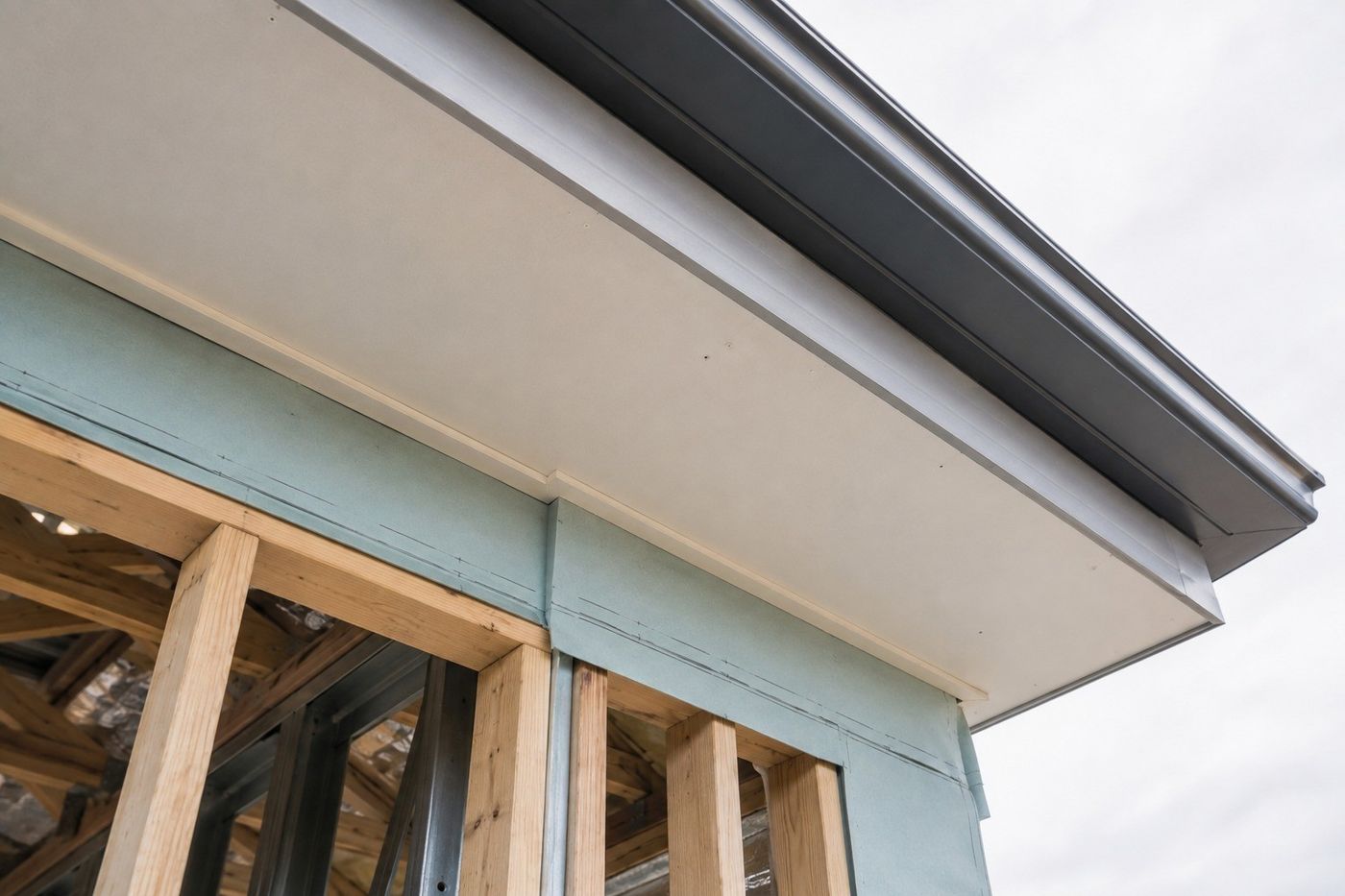
Nobody inspects the eaves. They are three metres up, they face down, and from the driveway they look fine right up until the moment a sheet sags, a joint opens or a brown stain appears along the fascia line.
Overview
Nobody inspects the eaves. They are three metres up, they face down, and from the driveway they look fine right up until the moment a sheet sags, a joint opens or a brown stain appears along the fascia line.
Soffit cladding takes more punishment than almost any other sheet on a WA house. It sits at the exact point where wind-driven rain, roof water, gutter overflow and roof-space humidity all converge, and it is the first part of the building to show you that something upstream has gone wrong. Ten minutes checking your soffit cladding before winter is worth more than any repair you will do after it.
What Eaves Are Actually Doing Up There
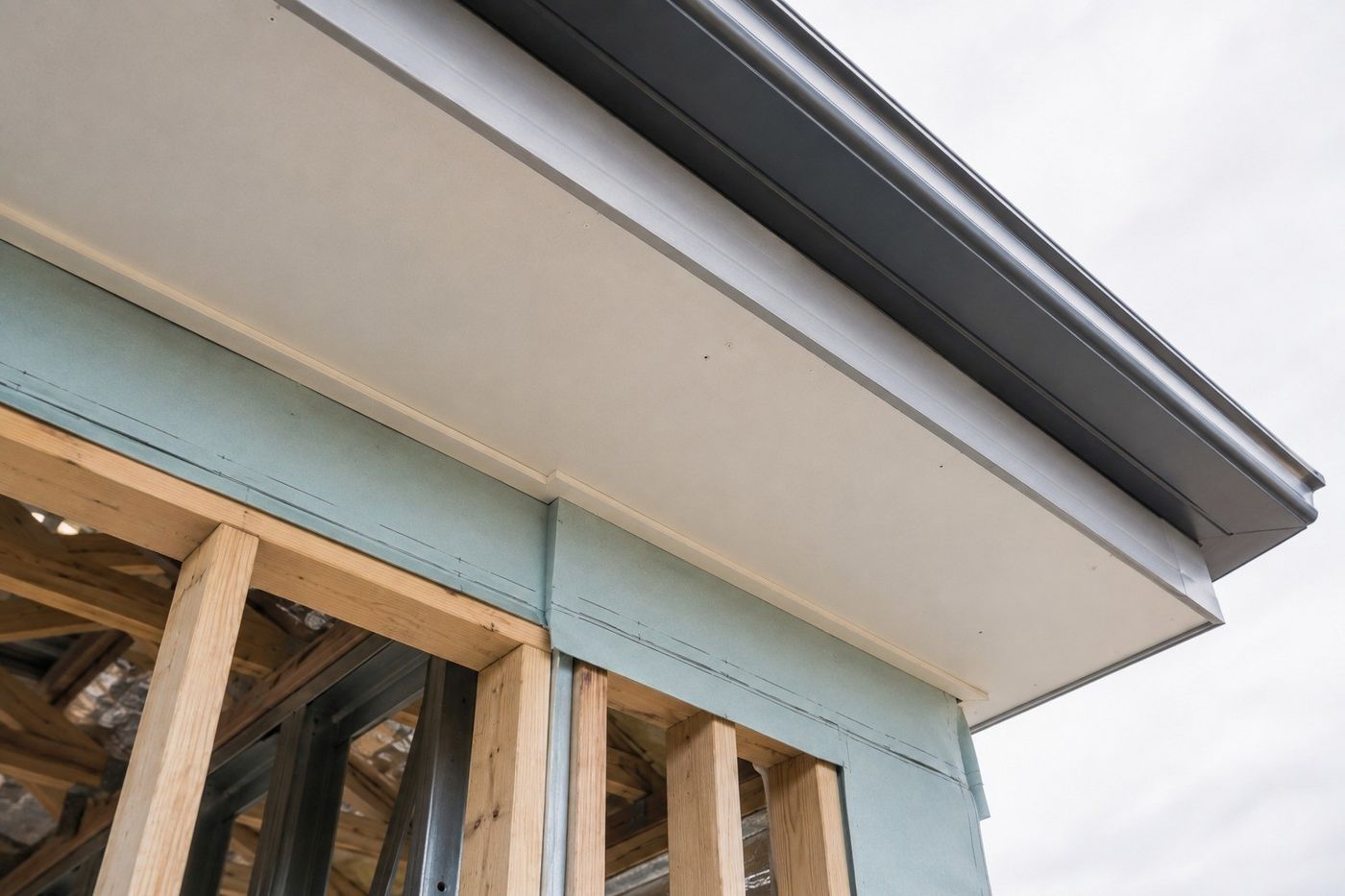
An eave is not decoration. It is doing three jobs at once, and soffit cladding is what makes all three possible:
That third one is the reason a failed soffit is more than a cosmetic problem. A blocked or sealed eave stops the roof space breathing, humidity climbs, and you get condensation on the underside of the roof and dampness working back into ceilings and wall tops. Soffit cladding is part of the ventilation system, not just the weather skin.
- Throwing water clear. The overhang keeps rain off the wall face, the window heads and the top of the cladding below.
- Shading the wall. In a WA summer the overhang is the cheapest solar control the building has.
- Ventilating the roof space. Most roof ventilation strategies draw air in at the eaves and exhaust it at the ridge. Block the eave and you stall the whole system.
Why Soffit Cladding Fails in the Wet Season
Almost every soffit failure we hear about traces back to water arriving somewhere it was not meant to, rather than the sheet itself giving up. The usual sources:
Notice that only one of those is really about the soffit cladding itself. Soffit cladding is usually the messenger, not the culprit.
- Blocked or undersized gutters. Water backs up over the rear edge of the gutter and straight onto the soffit sheet and eave framing.
- Missing or short roof sarking . Wind-driven rain past the tiles or sheeting lands on the eave lining instead of being carried to the gutter.
- Failed fascia-to-gutter seal. A slow drip at the back of the gutter runs along the fascia and wets the soffit edge every time it rains.
- Unsealed cut edges. Fibre cement is durable, but a raw cut edge left unsealed at a wall junction will wick moisture.
- Downpipe and overflow discharge. Water dumped against the wall splashes back up under the eave.
- Exhaust fans venting into the roof space. Warm wet air rises, hits the cold underside of the roof, and condenses back onto the eave lining and framing.
Seven Pre-Winter Checks
Run these before the rain sets in. A ladder, a torch and about ten minutes per elevation:
Anything you find here is cheap to fix in April and expensive to fix in August. That is the whole argument for a pre-winter soffit cladding inspection.
- Look along the fascia line for staining. Brown or grey streaks running down from the gutter mean water is getting behind it.
- Press the sheet near the wall junction. Any softness or flex means it has been wet for a while.
- Check the joints. Open butt joints, cracked jointing compound or lifting joint moulds let water and insects straight in.
- Look for daylight or gaps at the wall line. A gap between the soffit cladding and the wall is an unintended vent, and an entry point for embers in a bushfire area. Soffit cladding should meet the wall with a detailed junction, not a gap.
- Check eave vents are clear. Painted over, insulation -blocked or bird-nested vents stall the roof space airflow completely.
- Look up into the roof space at the eave. Insulation pushed hard into the eave is one of the most common causes of a stalled roof and a damp soffit.
- Check the gutter fall and the overflow path. If the gutter cannot shed a heavy downpour, the eave is where the excess goes.
Reading the Damage: What Each Symptom Means
The pattern of the damage tells you where the water is coming from, which matters more than the damage itself:
Replace the sheet without fixing the source and you will be back within two winters. Soffit cladding is durable, but nothing survives being continuously wet.
- Staining along the outer edge, near the gutter , gutter overflow or a failed rear seal.
- Staining at the wall junction , water running down the wall face, or a missing flashing above.
- Even dampness across the whole sheet , roof-space condensation rather than a leak.
- Sagging between fixings , the sheet has been wet long enough to lose stiffness, or fixings are at the wrong centres.
- Cracking radiating from a fixing , overdriven fixings or no allowance for movement.
- Rust marks at fixings , wrong fixing class for the exposure, common within a few kilometres of the coast.
Choosing the Right Sheet
Fibre cement is the default for eaves in WA because it does not rot, does not feed termites, holds paint well and handles the UV. Which sheet depends on what the eave has to look like and how exposed it is:
Whichever sheet you use, the soffit cladding is only half the specification. Fixings have to suit the corrosion environment, and within a few kilometres of the coast that means stepping up the class rather than using whatever is in the ute, because the fixings usually fail before the soffit cladding does. Our full fibre cement range covers the sheets, and our team can talk through fixing schedules for coastal jobs.
- Hardie™ Flex Sheet , the economical workhorse for soffits and eaves, and the sheet most WA homes have overhead already.
- Hardie™ Versilux™ Lining , square edged, designed for butt joints and geometric soffits where you want a crisp flat plane.
- Hardie™ Groove Lining , VJ profile for a lined timber look under a verandah or alfresco without the maintenance of timber.
Detailing That Actually Lasts
Good soffit cladding fails early far more often than bad soffit cladding fails late. The details that decide it:
- Seal cut edges. Every cut edge at a wall junction or penetration, sealed before the sheet goes up.
- Respect the expansion gap. Sheets move. Butting them hard against a wall guarantees a crack at the first hot spell.
- Fix at the right centres. Under-fixing causes the sag people blame on the sheet.
- Flash the wall junction properly. The soffit should be protected by what is above it, not relied on to shed water itself.
- Keep eave vents clear of insulation. Use baffles so ceiling insulation cannot be pushed into the eave.
- Prime and paint all faces, including edges. The back face matters in a humid roof space.
Eaves Do Two Jobs, and Ventilation Is the One People Break
It is easy to treat a soffit purely as weatherproofing and forget that it is also part of the roof ventilation path. Sealing every gap for the sake of neatness, or blocking eaves with ceiling insulation, removes the roof space's air intake.
The result is a roof that holds warm humid air all winter, condenses it on the underside of the roof sheeting, and drips it back onto ceiling insulation and eave framing. From below, that shows up as a damp soffit and a stained ceiling near the external wall, and it gets misdiagnosed as a roof leak every year. ABCB's condensation mitigation guidance covers the roof-space ventilation requirements worth checking your detail against.
If you are ventilating properly, soffit cladding needs a defined intake, continuous vent strip, purpose-made eave vents or a perforated sheet, not accidental gaps at the wall line.
What It Costs to Leave a Wet Eave Alone
A stained soffit looks like a paint job you can postpone. What is usually happening above it is not:
Every one of those starts as a mark on a soffit cladding sheet that somebody decided to look at next summer.
- The eave framing stays wet. Rafter tails and fascia backing are structural, and replacing them is a different order of job to replacing soffit cladding.
- Ceiling insulation gets damp. Wet batts lose most of their R-value, so the rooms below get colder and the heating bill goes up.
- Mould reaches the ceiling. Once damp works back along the top plate it comes through on the ceiling line inside, and now you are repainting rooms rather than eaves.
- Fixings corrode. Rust bleeds through paint, so the repair never looks right afterwards.
- Access costs double. Doing it once with the right sheets is cheaper than two trips up a ladder in worse weather.
Patch or Replace?
Once you have found the source and fixed it, the sheet itself is a straightforward decision:
A full eave replacement is not a big job compared with the access cost of getting up there twice. If the scaffold or the ladder work is happening anyway, doing the whole elevation usually costs less than two visits.
- Patch where the damage is one bay, the sheet is otherwise sound and firm, and the surrounding finish can be matched.
- Replace the run where the sheet is soft, sagging or delaminating, where multiple joints have opened, or where you are already up there for a re-paint.
- Replace and re-detail where the original install had no expansion allowance, wrong fixings, or the eave was never vented. In that last case you are not repairing soffit cladding, you are correcting a detail.
Get It Done Before the Rain
Soffit cladding work is easy in autumn and miserable in winter. Sheets need dry conditions to prime, joint and paint properly, and a wet roof space is a bad place to be diagnosing anything. Book the inspection now, order the sheets on the same call, and you will not be replacing soffit cladding from a ladder in the rain in July.
The eaves are the cheapest part of a house to look after and one of the most expensive to neglect, because everything they protect, wall tops, ceiling insulation, roof framing, costs more to repair than the sheet itself. Put soffit cladding on the autumn maintenance list and it stops being a winter emergency.
FAQ
What is the best material for soffit cladding in WA?
Fibre cement, in almost every case. It handles UV and moisture, will not rot or feed termites, holds paint, and comes in flat and VJ profiles to suit the look you are after. It is what almost all soffit cladding in Perth is made from.
Why is my eave lining sagging?
Usually prolonged wetting, under-fixing, or both. Find the water source first, gutter overflow, missing sarking or roof-space condensation, because replacing the sheet alone will not stop it happening again.
Should soffits be vented?
In most roof designs, yes. Eave vents are the intake for roof-space ventilation. Blocking them with insulation or sealing them for neatness is a common cause of condensation and damp ceilings.
Can I paint over a water-stained soffit?
Only after the source is fixed and the sheet is properly dry and sound. Painting over a stain on a sheet that is still getting wet just hides the problem until it comes back.
How often should eaves be inspected?
Once a year, before the wet season. It is a ten-minute visual check per elevation and it catches gutter, flashing and ventilation problems while they are still cheap.
Can I lay ceiling insulation right out to the eave?
No, that is one of the most common causes of a damp roof space. Insulation pushed into the eave blocks the air intake. Use eave baffles so the batts stop short and the ventilation path stays open.
Do I need special fixings near the coast?
Yes. Corrosion class matters within a few kilometres of the ocean, and using standard fixings there is one of the most common reasons soffit cladding stains and fails early.
We Can Help
Aussie Plasterboard stocks the James Hardie fibre cement sheets used for eaves and soffits across Perth, along with the jointing compounds, sealants and accessories that go with them. Tell our Osborne Park team the eave detail and the exposure and we will get the specification right, or request a quote and we'll get it on a truck.
More guides
- Mould Prevention in Perth: How the Right Wall System Stops It Before It Starts 22 August 2026
- Winter Condensation on Walls: Why It Happens and How to Stop It with Vapour Membranes 22 August 2026
- Cold Walls, High Bills: How Insulation Batts and Reflective Foils Cut Winter Heating Costs 22 August 2026