Guide
Fibre Cement Weatherboards: 5 Best Reasons They Suit Perth Weather
Weatherboard is iconic across Australia. From Federation cottages to modern coastal builds, those horizontal lines instantly say “home.” But not all weatherboards are equal—especially in WA, where salt air, high UV, and bushfire risk push materials to their limits. This guide qui
Overview
Weatherboard is iconic across Australia. From Federation cottages to modern coastal builds, those horizontal lines instantly say “home.” But not all weatherboards are equal—especially in WA, where salt air, high UV, and bushfire risk push materials to their limits. This guide quickly covers the main weatherboard types, then walks through the build journey to show without the hard sell why fibre cement is the most future-proof choice .
What Is Weatherboard (and Why Aussies Love It)
Weatherboard is an external wall cladding made from overlapping boards that keep weather out and character in. Today, Australians typically choose from timber , fibre cement , vinyl (uPVC) , engineered wood , or metal profiles—each promising a certain look, maintenance load, and lifespan.
The Field: Common Weatherboard Options
Timber Weatherboards
Warm, natural and classic. Timber can be sustainably sourced and finishes beautifully. But it moves with moisture and heat , needs regular repainting , and remains susceptible to termites and rot if detailing lapses.
Fibre Cement Weatherboards
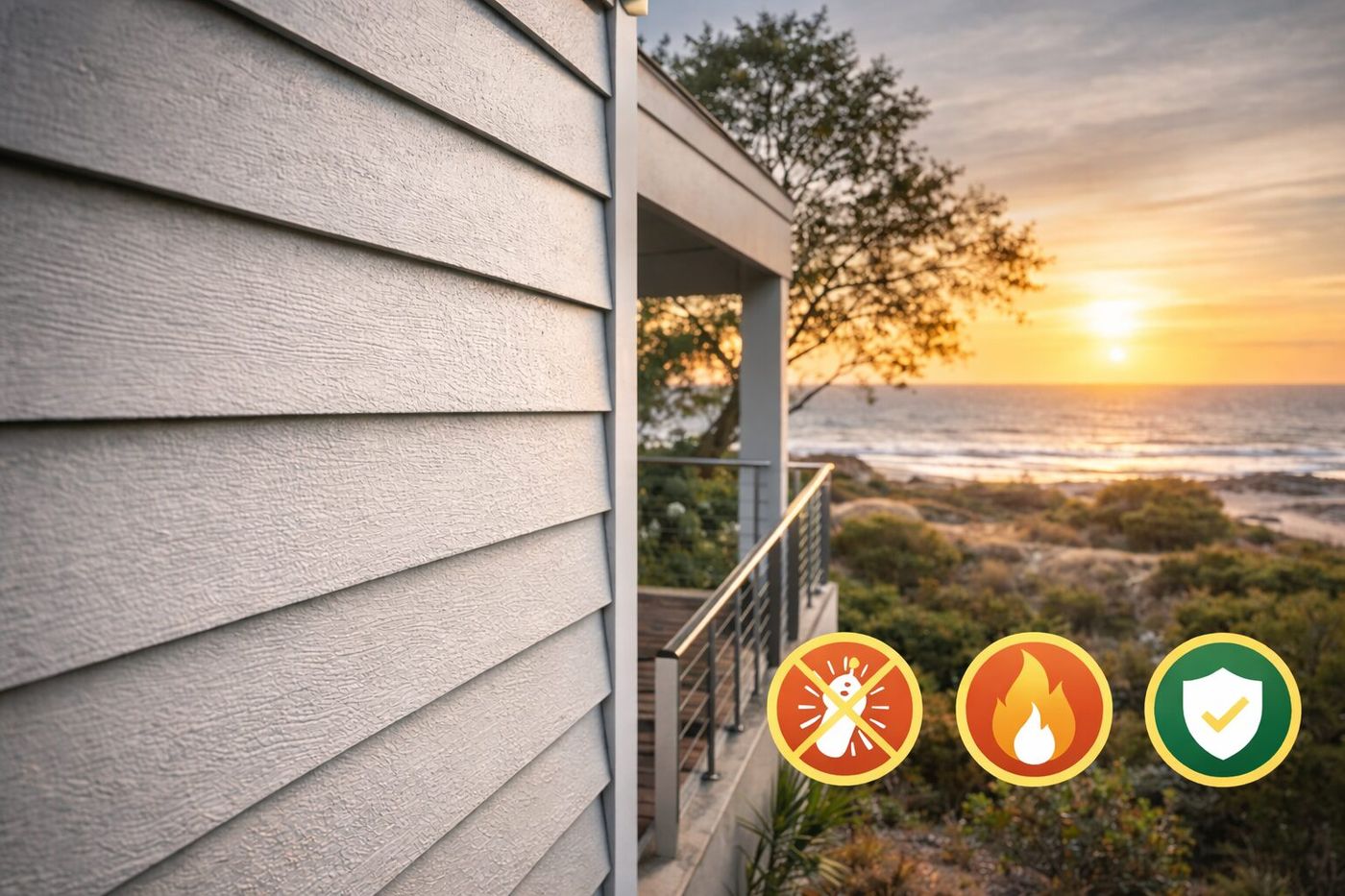
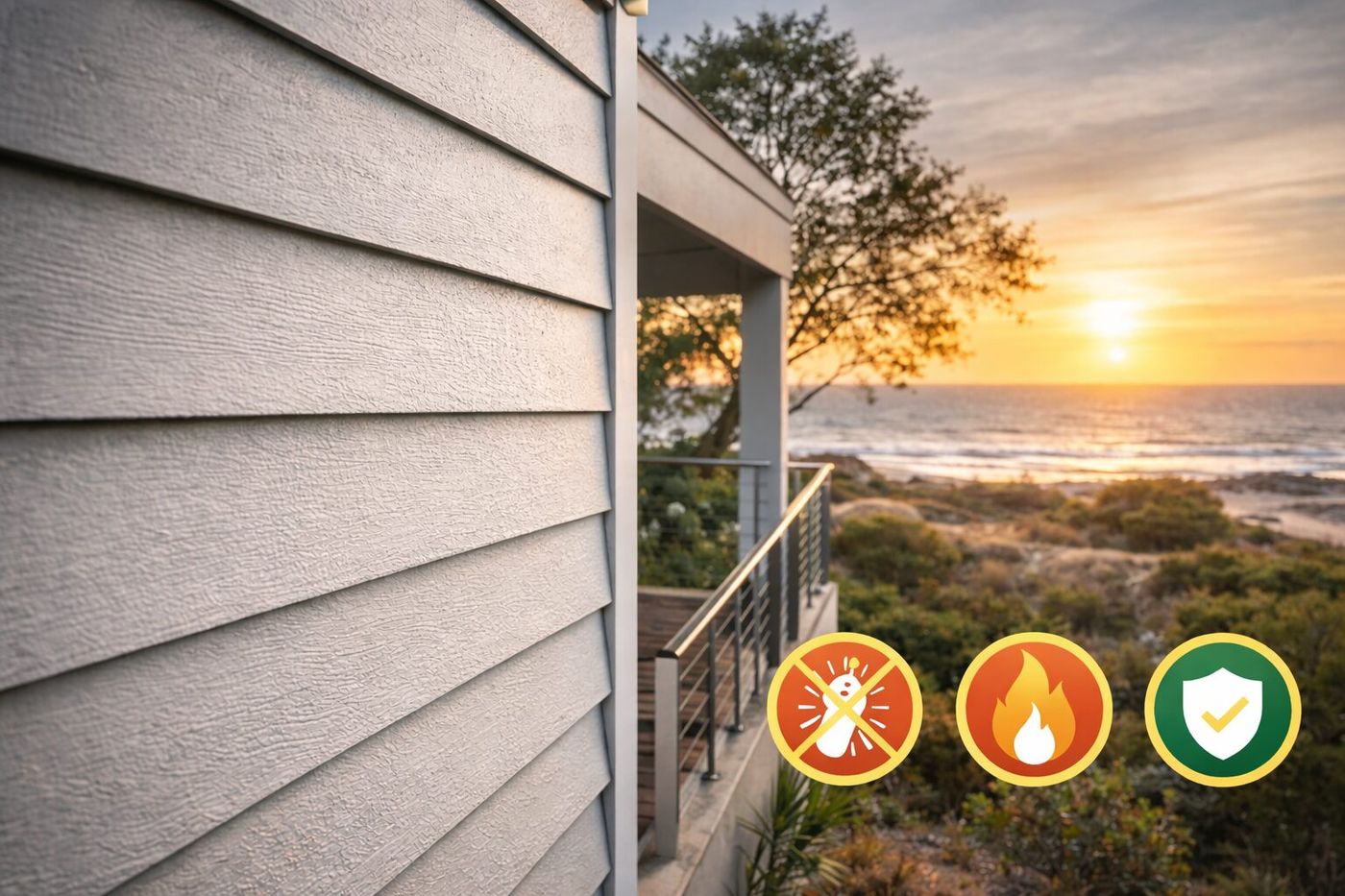
A composite of cement, sand and cellulose fibres. Non-combustible , dimensionally stable , termite/rot resistant , and UV tough —ideal for WA’s coastline and heat. Takes paint superbly for longer repaint cycles and cleaner shadow lines.
Vinyl (uPVC) Weatherboards
Lightweight and cost-effective. Colour-through surfaces reduce repainting, but UV ageing , thermal distortion , and a plastic sheen can date the façade in high-sun environments.
Engineered Wood Weatherboards
Timber look with factory treatments. Better than raw timber on moisture, but still combustible and reliant on meticulous edge sealing and coating upkeep .
Metal Weatherboards
Durable and non-combustible, with crisp modern lines. Can dent/scratch , and thermal movement demands careful detailing; touch-ups are often visible.
Fast Comparison (WA Reality Check)
Conclusion: Across the metrics that matter in WA, fibre cement wins most columns most of the time .
| Factor | Fibre Cement | Timber | Vinyl (uPVC) | Engineered Wood | Metal |
|---|---|---|---|---|---|
| Fire behaviour | Non-combustible | Combustible | Softens/melts | Combustible | Non-combustible |
| Termites/rot | Resistant | Vulnerable | Resistant | Improved but moisture-sensitive | Resistant |
| UV & salt (Perth coast) | Excellent | Heavy maintenance | Can chalk/brittle | Better than timber, still coat-reliant | Good but dents show |
| Movement | Low | High (cups/checks) | Thermal distortion | Medium | Thermal expansion |
| Paint/finish | Holds paint, long cycles | Frequent repainting | Colour-through look | Coating upkeep | Factory coat; repairs visible |
| Whole-of-life cost | Low | High | Medium | Medium | Medium |
Scroll the table sideways to see every column.
The Journey: From Design to Long-Term Ownership
(Where fibre cement quietly makes everything easier.)
1) Design & Planning
- Goals: Aesthetic, BAL/bushfire considerations, coastal durability, energy performance.
- Why fibre cement helps: It’s non-combustible for BAL strategies, profile-rich (smooth or timber-look), and stable , so designers can rely on clean, consistent shadow lines without over-engineering for movement.
- 2) Specification & Detailing
- What matters: Stud spacing, cavity design, WRB/ sarking , flashings, corner/trim systems, fixings.
- Why fibre cement helps: Low movement means simpler jointing , long-lived sealants , and predictable detailing . You design it once—you don’t redesign around seasonal board movement.
3) Procurement
- What matters: Availability, compatible trims, coating systems, cost predictability.
- Why fibre cement helps: Common profiles and trim kits are readily available ; paint systems last longer , stretching maintenance budgets further than timber alternatives.
4) Installation
Safety note: Use P2 respiratory protection and dust-controlled cutting methods when working with fibre cement.
- Steps: WRB and flashings → cavity battens → starter strips → boards → corners/joints → coating.
- Why fibre cement helps: Boards are rigid and true , which makes straight lines and tight corners easier to achieve. Fixings stay put (less seasonal creep). Near the coast, step up to stainless fasteners —and you’re set.
5) Maintenance & Ownership
- Routine: Gentle washdowns, inspections at penetrations, repaint on extended cycles.
- Why fibre cement helps: Long repaint intervals + no termite treatment cycles + no warp/cup repairs = low total cost of ownership .
Climate-Smart Choices for WA
- Coastal builds: Choose stainless fasteners , ventilated cavity, edge priming, and lighter colours to reduce heat load.
- Bushfire-prone sites: Non-combustible cladding like fibre cement supports BAL compliance (confirm site-specific requirements).
- Thermal & acoustic comfort: Pair fibre cement with insulated cavities for better indoor comfort and quieter interiors.
Why We Recommend Fibre Cement at Aussie Plasterboard
We work across Perth & WA and see first-hand what salt, sun and bushfire risk do to façades. Fibre cement simply holds up better : straighter for longer, safer in fire conditions, fewer surprises in maintenance. It’s the reliable, good-looking default for most WA builds.
Next Steps (Perth & WA)
Related reads:
See our full fibre cement range
WorkSafe guidance for cutting fibre cement safely
James Hardie working safely with fibre cement
- See profiles & samples (smooth and timber-look options)
- Request a supply-only or supply-and-install quote
- Builder & trade pricing available
- Advice on cavity design, trims, coatings, and coastal specs
FAQ
Will fibre cement look like real timber?
Yes—modern profiles include timber-look grains and smooth contemporary finishes with crisp reveals.
Does it work over brick or framed walls?
Yes—use appropriate batten/rail systems and flashings to create a drained, ventilated cavity .
How often will I need to repaint?
Typically much less frequently than timber because the boards don’t expand/contract as much, so coatings last longer.
Is it expensive?
Upfront, fibre cement is competitive ; over time, maintenance savings and resilience make it cheaper to own .